

Nachmanides In Barcelona: The Rabbi Who Defended Judaism Before A King
Long before Barcelona had a Jewish quarter marked on tourist maps, it had a rabbi so respected that a king summoned him personally to defend his faith in public — and then paid him for the privilege of losing the argument. His name was Rabbi Moses ben Nachman. History remembers him as Nachmanides, or by his Hebrew acronym: Ramban.
Understanding Ramban is understanding what medieval Barcelona actually was — not a footnote in Jewish history, but for a time, one of its intellectual centers.
Who Was Nachmanides?
Born in Girona in 1194, Moses ben Nachman rose to become chief rabbi of Catalonia, a position that placed him at the center of Jewish religious and civic life across the region, including Barcelona. Like his predecessor Maimonides, Ramban was not only a rabbinic authority but a physician, serving in that capacity in the royal court of King James I of Aragon.
- Scholar and Physician: Ramban’s medical training gave him direct access to royal circles, an unusual position of trust for a Jewish leader in 13th-century Spain.
- Torah Commentator: His commentary on the Torah remains one of the most widely studied works in traditional Jewish learning today, still printed alongside the text in study editions worldwide.
- Kabbalist: Ramban was among the most significant early voices in Jewish mysticism, weaving Kabbalistic thought into his biblical commentary at a time when it was rarely written down at all.
1263: Called Before The King
In July 1263, Ramban was compelled to appear at the royal palace in Barcelona for a public religious debate against Pablo Christiani, a Jewish convert to Christianity acting on behalf of the Dominican order. The event, known today as the Disputation of Barcelona, tested Ramban directly in front of King James I. By most accounts, including the king’s own words, Ramban defended Judaism with such skill that the king rewarded him — even as the Church pushed back hard against the outcome.
That confrontation is a story worth its own telling. What matters here is what came after.
Exile, And A Journey To The Land Of Israel
The disputation’s aftermath turned severe. Ramban was formally exiled, and pressure from the Church transformed what began as a limited punishment into permanent banishment from the kingdom. He left Catalonia and never returned.
By 1267, Ramban had reached the Land of Israel, arriving in Jerusalem on the 9th of Elul. He found a Jewish community there in fragments and set about rebuilding it, establishing a synagogue that helped anchor Jewish life in the city. He later settled in Acre, where he continued writing and teaching until his death around 1270.
A Legacy That Outlived The Exile
What’s remarkable about Ramban’s story is how little his banishment diminished his influence. If anything, the opposite happened.
- The Ramban Synagogue: The synagogue he helped establish in Jerusalem’s Old City is still known today as the Ramban Synagogue, among the oldest active synagogues in the city.
- Enduring Scholarship: His Torah commentary, halachic writings, and Kabbalistic works are still studied daily in yeshivot and homes around the world — a direct, unbroken line from a rabbi exiled from Barcelona to Jewish learning today.
- A City Of Sages: Ramban wasn’t working in isolation. Barcelona in his era was home to other towering scholars, including Rabbi Shlomo ben Adret, for whom a street in the Gothic Quarter is named — part of what earned the city its reputation as a center of Jewish scholarship.
Tracing Ramban's Barcelona Today
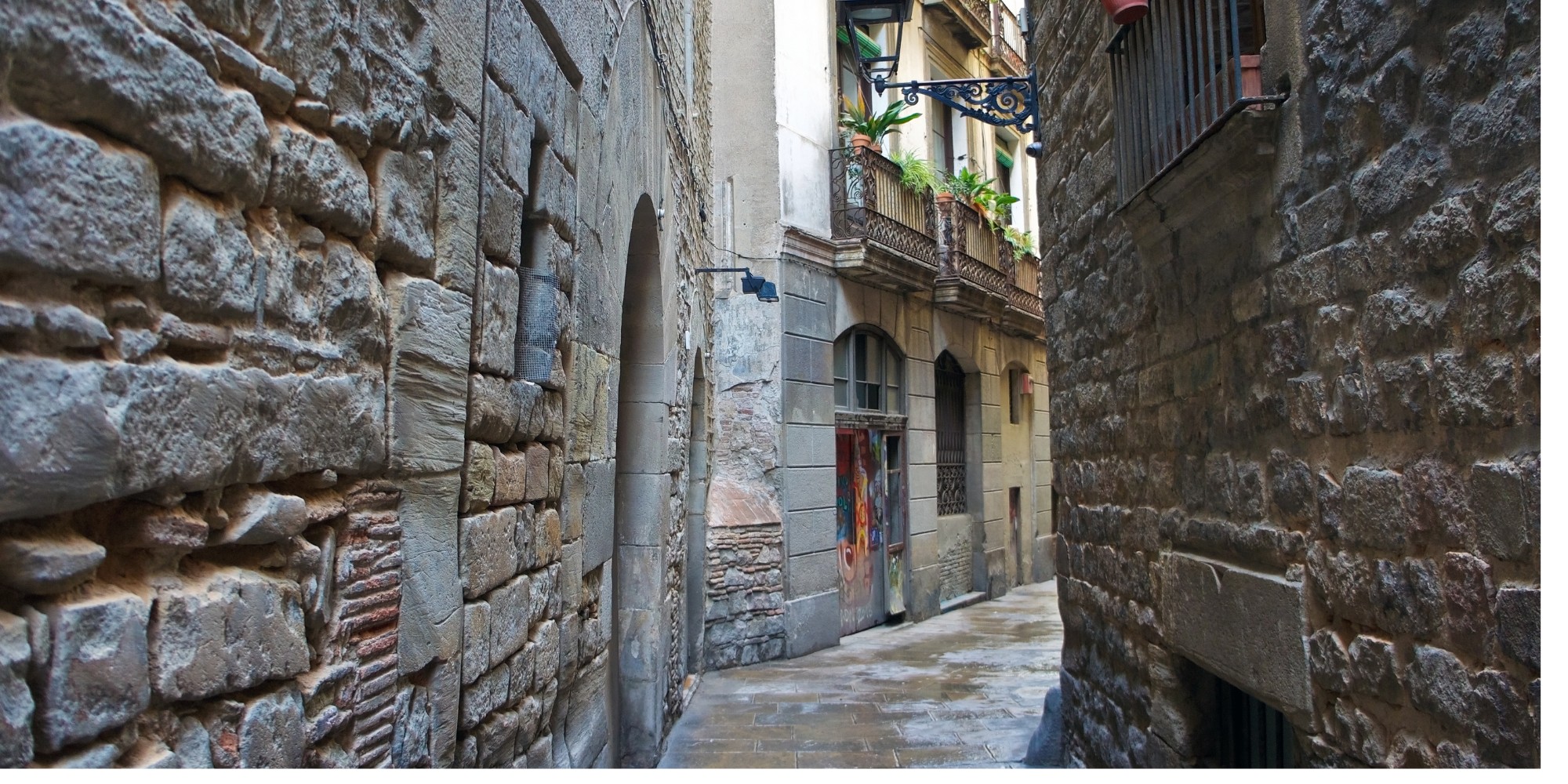
There’s no single plaque marking where Ramban stood before the king, but his presence lingers in the layout of the Gothic Quarter itself: the narrow streets of the old Call, the Sinagoga Major nearby, and the scholarly names still attached to the neighborhood’s map. Walking these streets with the disputation in mind changes how they read — not just as pretty medieval alleys, but as the setting for one of Jewish history’s more consequential confrontations.
Cultural Connection: Ramban’s story is Barcelona’s paradox in miniature — a city that could produce and celebrate one of Judaism’s greatest minds, and still exile him for defending it too well.
Frequently Asked Questions (FAQ)
Who was Nachmanides and why is he connected to Barcelona?
Nachmanides, or Ramban, was chief rabbi of Catalonia and a leading Torah scholar, physician, and Kabbalist. He is tied to Barcelona primarily through the 1263 Disputation of Barcelona, a public religious debate he was compelled to attend at the royal palace before King James I.
What happened to Ramban after the Disputation of Barcelona?
Despite defending his position successfully by most accounts, Ramban was sentenced to exile, which was later extended to permanent banishment under pressure from the Church. He left Catalonia for good and eventually settled in the Land of Israel.
Is there a synagogue connected to Ramban that still exists?
Yes. The synagogue Ramban helped establish in Jerusalem’s Old City after his arrival in 1267 is still known as the Ramban Synagogue and remains one of the oldest active synagogues in the city.
Why does Ramban matter for travelers exploring Jewish Barcelona?
His story connects the physical streets of the Gothic Quarter’s old Call to one of the most significant intellectual confrontations in medieval Jewish history, adding depth to what might otherwise be just a scenic walk through old Barcelona.
