
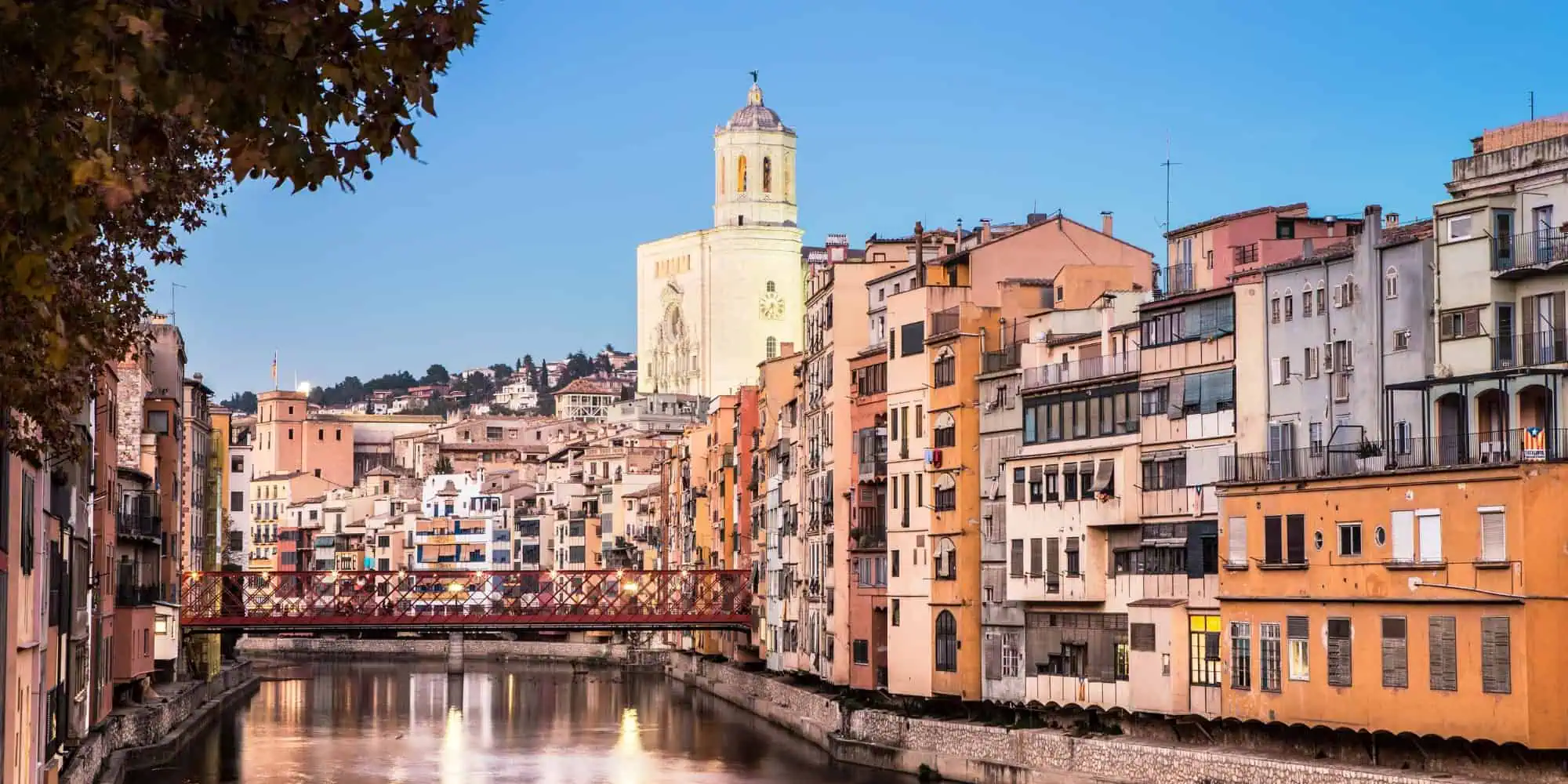

Jewish Girona: The Medieval Quarter That Barcelona's Jews Called "The Other Home"
Most people fly into Barcelona, spend a few days exploring the city’s ancient Call, and leave Spain without ever making it to Girona. That’s a mistake — especially for Jewish travelers.
Girona’s Jewish quarter, known as El Call, is one of the best-preserved medieval Jewish neighborhoods in all of Europe. Not “well-preserved for Spain.” Not “reconstructed.” Actually preserved. The narrow stone alleys look almost exactly as they did in the 13th century, when Girona’s Jewish community was home to some of the most important Kabbalistic scholars of the medieval world — including Rabbi Isaac the Blind, who is credited with introducing the Kabbalah to Catalonia.
Why Girona, and Not Just Barcelona?
Barcelona’s Call was systematically destroyed after the 1391 pogrom. Buildings were torn down, synagogues were repurposed, and the Jewish presence was literally built over. Recovering that history requires a guide who knows where to look.
Girona survived differently. The quarter was sealed off rather than demolished, which means you can walk into a 700-year-old alley, look up at a doorway, and still see the outline of where a mezuzah was fixed to the stone. The Bonastruc ça Porta Centre — named after Girona’s most famous Jewish son, Nachmanides — houses a small but serious museum dedicated to Sephardic Jewish life, and sits on the site of the city’s last active synagogue.
Nachmanides himself left Girona in the 13th century after a famous religious debate in Barcelona went too well. He won the argument, embarrassed the Church, and had to flee to the Land of Israel. His footsteps are literally in the stones here.
What a Day in Jewish Girona Actually Looks Like
Girona is 40 minutes from Barcelona by fast train, which makes it an entirely realistic day trip. The Jewish quarter is compact enough to cover properly in two to three hours, but dense enough with history that rushing it would be a waste.
A private guided visit usually begins near the medieval walls and moves inward through the Call, stopping at the key architectural remnants, the old synagogue site, and the Centre Bonastruc ça Porta. From there, many visitors continue to the cathedral — which is worth seeing in its own right — before returning to Barcelona in the afternoon.
The city also has a remarkable Jewish archive, the Arxiu Diocesà, which holds documents related to the Jewish community dating back to the 12th century. Most tourists never see it. Most guided itineraries don’t include it. It’s worth asking about.
One Thing Visitors Always Say
Almost every guest who visits Girona with us says the same thing on the way back: “I wish we’d had more time.” The quarter is small, but the history is enormous — and the quality of what’s been preserved makes it feel more real than almost any other Jewish site in Spain.
If you’re planning a Jewish heritage trip to Catalonia, Girona isn’t an optional add-on. It’s an essential part of the story.
