

1391 or 1492? Understanding What Happened to Jewish Barcelona
Visitors to Barcelona’s Jewish quarter often hear two dates: 1391 and 1492. Both are important, but they refer to different events.
In 1391, Barcelona’s Jewish quarter was violently attacked during a wave of anti-Jewish violence. In 1492, the Spanish monarchs issued an expulsion decree requiring Jews who did not convert to Christianity to leave their realms. Understanding the difference helps us see Jewish Barcelona’s story more clearly—and avoid reducing centuries of life to a single ending.
Jewish life in medieval Barcelona
Long before either date, Jewish residents were part of Barcelona’s urban life. The neighborhood known as El Call was home to a community connected to the wider city through commerce, public life and scholarship.
The Barcelona History Museum highlights the community’s contributions and figures such as the rabbi and scholar Salomó ben Adret, also known as the Rashba. Exploring El Call today means looking for traces of that community within a city that has changed many times since the Middle Ages.
What happened in Barcelona in 1391?
In August 1391, Barcelona’s Jewish quarter was attacked as anti-Jewish violence spread across parts of the Iberian Peninsula. People were killed, and the violence profoundly disrupted the community.
The Barcelona History Museum describes the attack as marking the decline and dispersion of the city’s Jewish community. Some survivors converted to Christianity, while others left or faced uncertain futures. It is important not to treat those experiences as identical: families responded under different pressures and circumstances.
What happened in 1492?
More than a century later, the Alhambra Decree ordered Jews who refused conversion to Christianity to leave the Spanish monarchs’ realms. Its impact extended far beyond Barcelona and became a defining event in Sephardic history and the Jewish diaspora.
The distinction matters: the attack on Barcelona’s medieval Jewish community happened in 1391; the wider expulsion decree came in 1492. Saying that Barcelona’s Jewish quarter simply ended with the expulsion skips over the earlier violence and the changes that followed.
Who were the conversos?
The term conversos refers to Jews who converted to Christianity and, in many historical contexts, their descendants. Conversion did not mean that every family had the same experience or relationship to its past.
When exploring this history, it’s worth asking careful questions rather than assuming that all conversos secretly practiced Judaism or that their identities were simple. Their stories sit within a complicated history of religious pressure, family ties and social change.
Why visit El Call today?
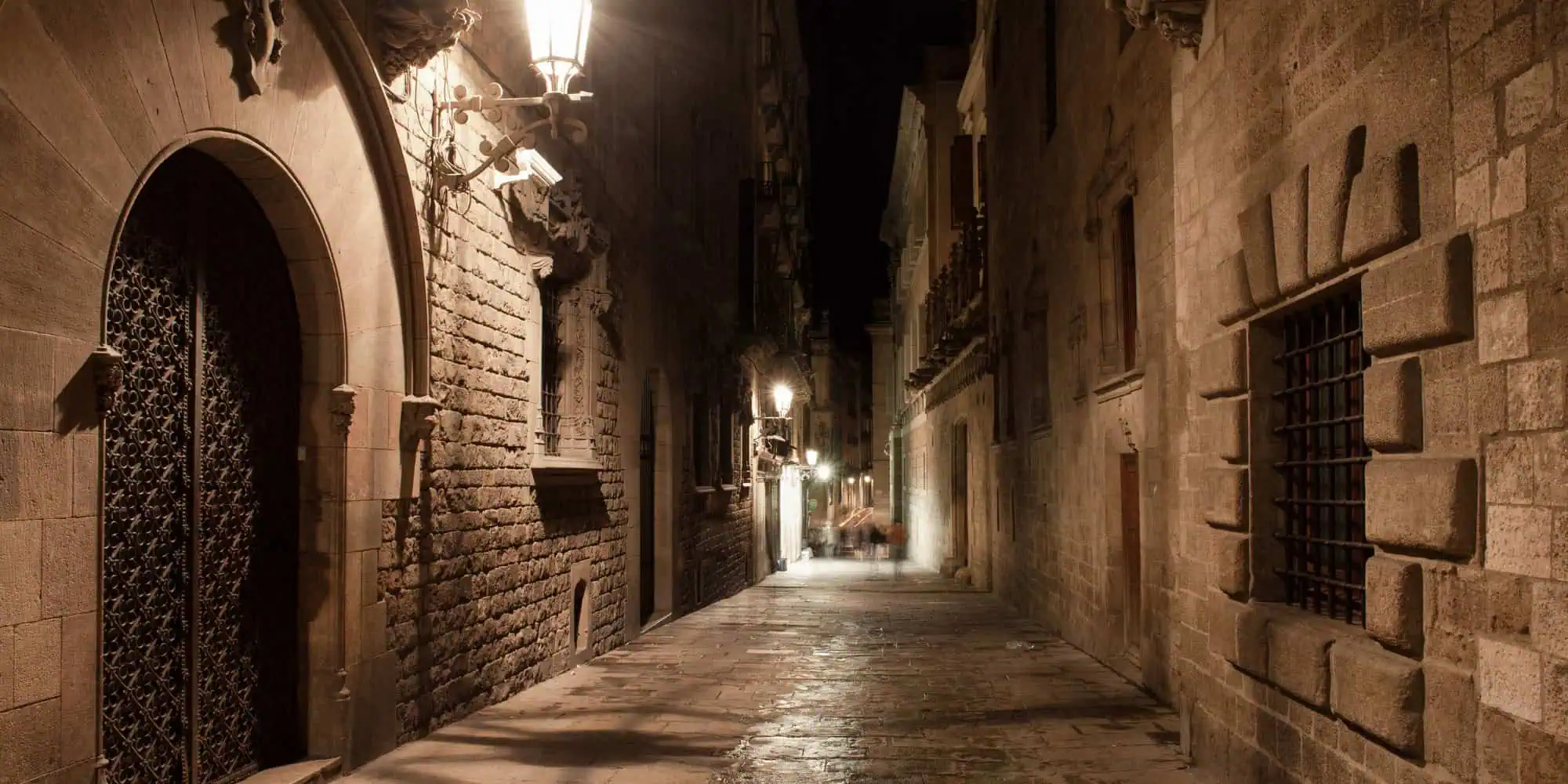
A walk through El Call offers a chance to connect the broad history of Sepharad with a particular place: streets where people lived, worked, studied and built community.
It is also a reminder that Jewish history is not only a story of loss. A meaningful visit makes room for scholarship, everyday life, resilience and the questions that connect past and present.
For a starting point, MUHBA El Call presents the history of the neighborhood and its community. Check the museum’s current visitor information before going.
History that stays with you
For Michele Schwartz, exploring Jewish Barcelona with one of our guides offered a new perspective on a history she thought she already knew. In her Google review, she wrote:
“He knew more about Jewish history in Spain, and in Barcelona in particular, than I ever learned in Sunday school. It was a great tour.”
— Michele Schwartz, Google review
It’s the kind of connection that can turn a walk through Barcelona’s old streets into a deeper understanding of Jewish life and history.
Frequently asked questions
Did the 1492 expulsion and the 1391 attack happen at the same time?
No. They were separate events, more than a century apart. The 1391 attack devastated Barcelona’s medieval Jewish community; the 1492 decree applied across the Spanish monarchs’ realms.
Can you still visit Barcelona’s Jewish quarter?
Yes. El Call is part of today’s Gothic Quarter. The neighborhood has changed substantially, so a visit is most rewarding when the surviving streets and sites are understood in historical context.
Where can I learn more during a visit?
You can explore the neighborhood independently, visit MUHBA El Call or join a guided experience. For an introduction, read our Jewish walking tour guide.
To explore the history with a local guide, see Barcelona Dreaming’s Jewish heritage tours.
